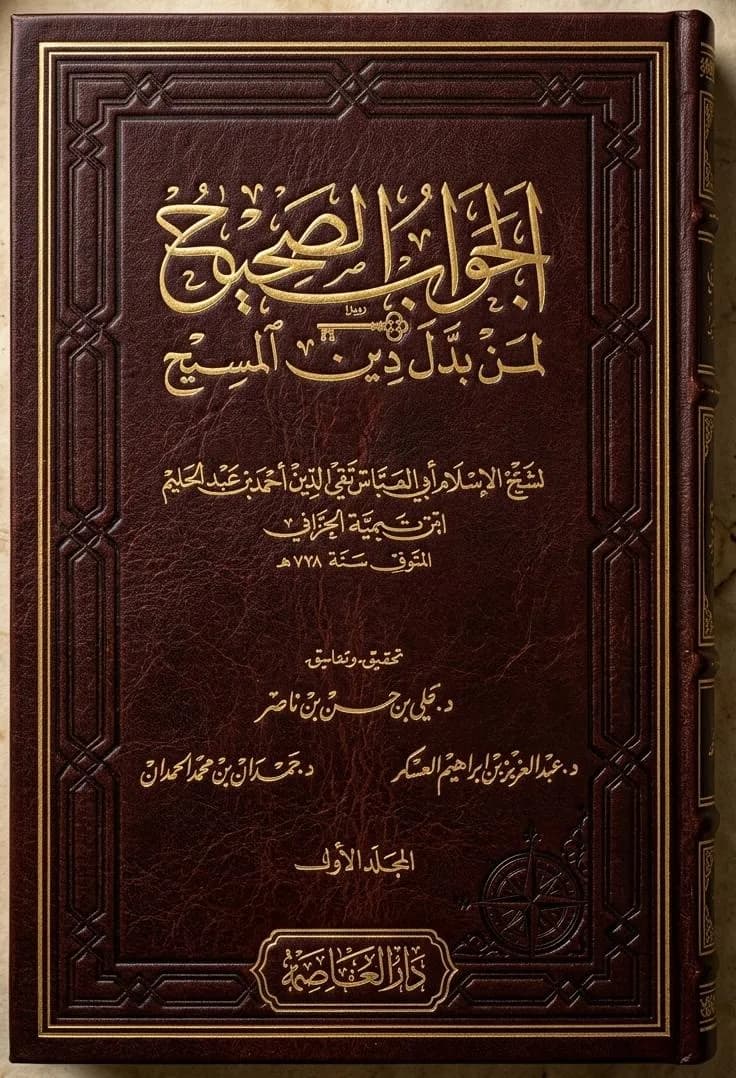
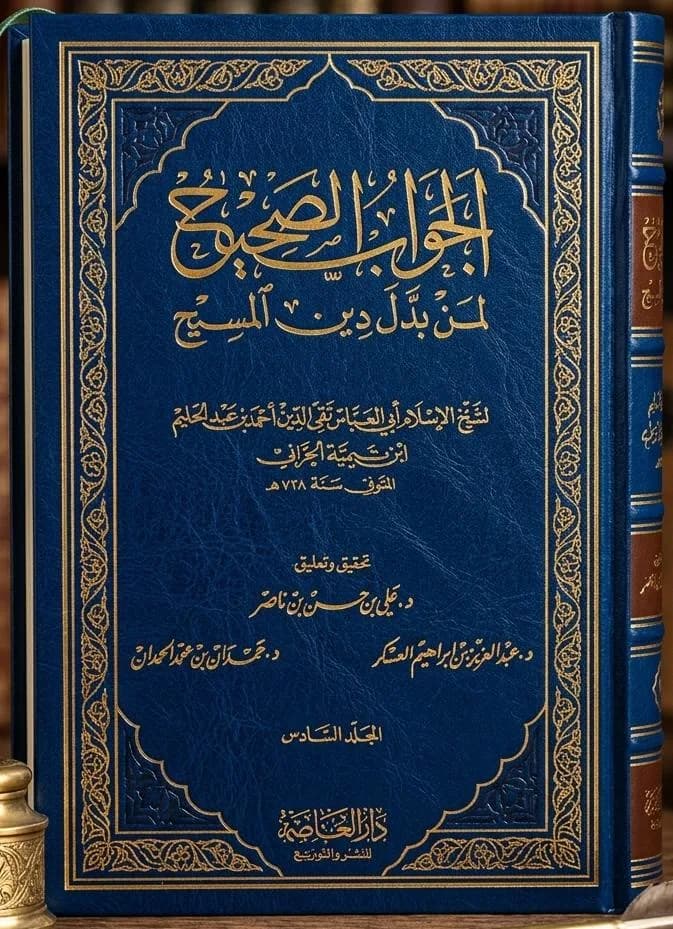
"Jawab al-Sahih li-man baddala din al-Masih (part 6)"
 AR
ARJawab al-Sahih li-man baddala din al-Masih (part 6)
"This volume focuses heavily on the theological and rational proofs of the prophethood of Muhammad (peace be upon him). It highlights the distinct moderation of the Muslim Ummah in core tenets of faith, legal rulings and theology. The text systematically categorizes and details the various miracles and signs (A'lam al-Nubuwwah) granted to the Prophet ranging from his control over nature and physical elements to his prophecies of unseen matters. Furthermore, it establishes a rigorous epistemological framework, outlining six major methods of mass-transmission (Mutawatir) to definitively verify these prophetic signs and counter the arguments of skeptics."
The sixth volume of "Al-Jawab al-Sahih liman baddala din al-Masih" by Shaikhul-Islam Ibn Taymiyyah serves as a foundational and rigorously structured theological reference in the study of prophethood. This volume opens by demonstrating the virtues of the Muslim Ummah and its distinct combination of faith and righteous deeds, while highlighting its balanced and moderate stance (Wasatiyyah) regarding Monotheism, prophethood and jurisprudence (the lawful and the prohibited). Ibn Taymiyyah then transitions into classifying those who claim prophethood, establishing rational and textual criteria to distinguish true prophets from false pretenders. He provides decisive evidence through cosmic and historical signs such as the Event of the Elephant and the celestial guarding of the heavens, alongside the Prophet's extensive and verified prophecies of past and future unseen matters. Furthermore, the volume comprehensively details manifestations of divine support and physical miracles, including the Prophet's God-given influence over creation such as animals, trees and wood as well as the multiplication of water, food and fruits, the submission of stones, the backing of angels, divine protection from enemies and the immediate answering of his supplications. In conclusion, Ibn Taymiyyah articulates a strict epistemological framework based on six major paths of mass-transmission (Mutawatir) encompassing general, specific and morally-continuous transmission as well as the widespread physical witnessing of signs and their systematic classification by scholars to definitively establish the prophethood of Muhammad ﷺ. Within this framework, he critically analyzes and refutes the arguments of theological factions that deny causality in supernatural events, and chronologically categorizes prophetic signs into those occurring before the prophetic mission, during the Prophet's lifetime and after his passing, proving that all matters pertaining to prophethood are inherently tied to the truth of the message and the integrity of the messenger.
Dar Al-Asimah for Publishing and Distribution
Publisher
Dar Al-Asimah for Publishing and Distribution is a prominent intellectual landmark in the Arab publishing world. Founded in Riyadh, Saudi Arabia, it has established itself as one of the most important publishers specializing in reviving Islamic heritage and publishing dawah oriented books. The house extends its geographical reach through its headquarters in Riyadh and its branch in Egypt, providing the Arab library with meticulously verified scientific publications characterized by accuracy and rigor. Among its most notable works are "Tafsir Ibn Rajab al-Hanbali", "Al-Iman al-Kabir" and "The Biography of Imam Ahmad ibn Hanbal" as narrated by his son Abu al-Fadl Salih, in addition to the "Salafi Series of Najdi Letters and Books" .The house is keen on building bridges of communication with readers and researchers through its official platforms, keeping pace with its audience's aspirations to acquire the most precious books and scientific treatises.
Facebook:
https://www.facebook.com/profile.php?id=100078145984895&rdid=TZQRtGM96jybpmm4&share_url=https%3A%2F%2Fwww.facebook.com%2Fshare%2F1DfnvBivNf%2F
X Platform:
https://x.com/darasma1
Translator Not Available
Translator information will be added soon