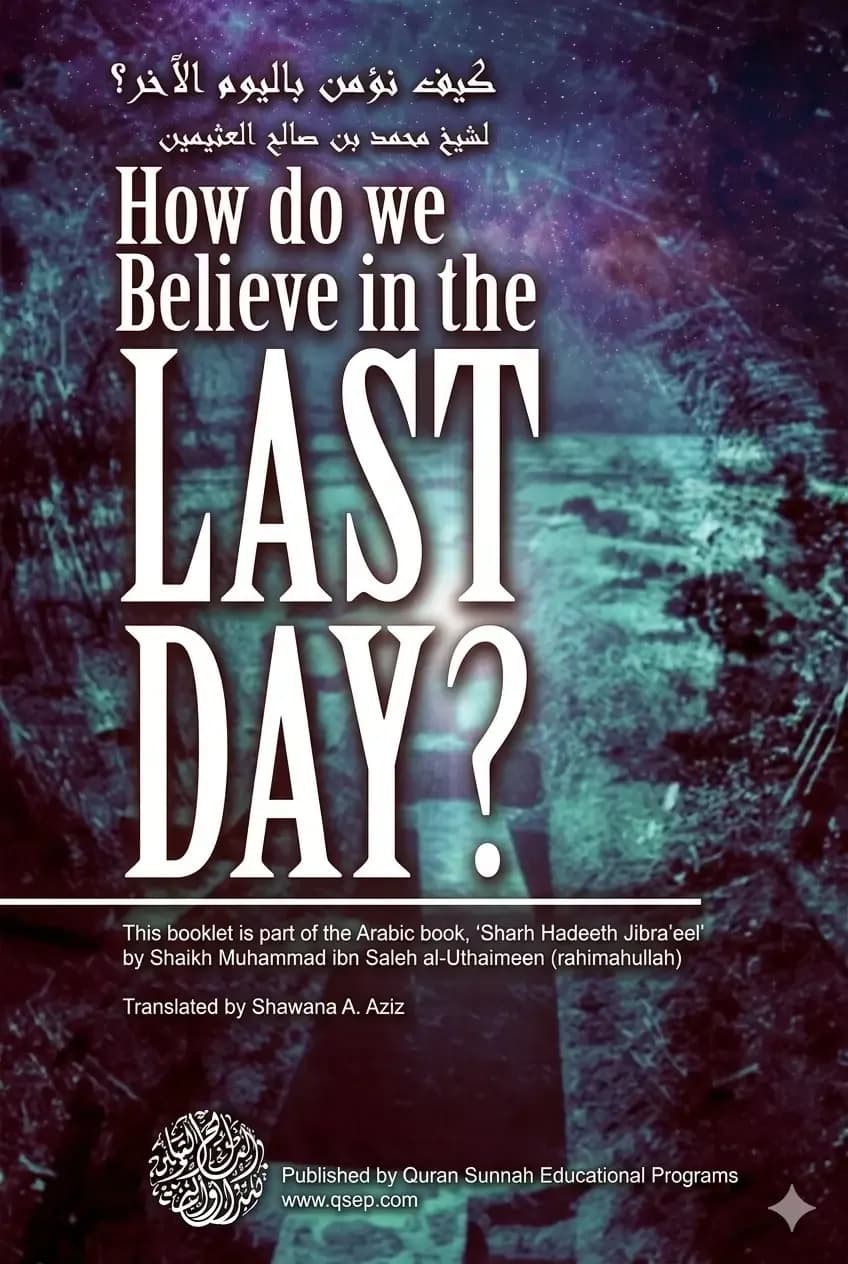
"How do we Believe in the LAST DAY?"
 EN
ENHow do we Believe in the LAST DAY?
"The book "How do we Believe in the LAST DAY?" is an Islamic booklet extracted and translated from the book “Sharh Hadeeth Jibra’eel” (The Explanation of the Hadith of Gabriel) by the eminent scholar Shaikh Muhammad ibn Saleh al-Uthaimeen. The book focuses primarily on explaining the fifth pillar of faith, which is "Belief in the Last Day," and simplifies the textual and rational evidences for achieving this belief in an easy, methodology-driven approach. It covers the stages and unseen realms that an individual passes through regarding the Last Day, starting from the trial, punishmentand bliss of the grave, through the resurrection, the gathering, the accountability, the scale and the flying of the records, up to the cistern (Al-Hawdh), the path (Al-Siraat) and the eternal settlement in Paradise or Hellfire. This makes it an important faith-based and educational guide for Muslims in general and for English speakers in particular."
The book "How do we Believe in the LAST DAY?" is a valuable educational and dawah publication issued by the "Quran Sunnah Educational Programs" (QSEP) institution and translated into English by the translator Shawana A. Aziz. Its scientific material was gathered and adapted from the book “Sharh Hadeeth Jibra’eel” by the eminent scholar Shaikh Muhammad ibn Saleh al-Uthaimeen, specifically from the section dedicated to explaining the fifth pillar of Islamic faith. The book is methodologically structured to address the correct Muslim creed and the human journey from the end of worldly life to the final destination. It begins with the stage of the grave and the Barzakh (intermediary realm), including details of the trial of the grave, the questioning by the two angels, and the reality of punishment and bliss. It then moves to the major events of the Day of Resurrection, such as the resurrection, the revival of bodies, the closeness of the sun to creation and how servants will be saved. Furthermore, the booklet details the reality of the final accountability (Al-Hisab), the presentation of creation before Allah, the scale (Al-Meezan), how deeds are weighed and the multiplicity of scales. It also highlights the flying of the scrolls and receiving the records with either the right or the left hand, the Prophet’s ﷺ visited cistern (Al-Hawdh) and its descriptions, the conditions and types of intercession (Shafa'ah) and crossing the path (Al-Siraat) set over Hellfire. It concludes by explaining Paradise and Hell as the eternal destinations for all creation, establishing that they currently exist and are everlasting. The book is distinguished by Shaikh al-Uthaimeen's smooth and organized style, which relies on breaking down doctrinal misconceptions by posing questions and providing textual and intellectual evidences, making it an essential text for solidifying spiritual upbringing, encouraging good deeds, and preparing for the meeting with Allah.
Quran Sunnah Educational Programs
Publisher
Quran Sunnah Educational Programs (QSEP) is an Islamic dawah and educational platform and publishing house, established with the aim of spreading the correct Islamic creed and Sharia sciences based on the Quran and the Prophetic Sunnah according to the understanding of the righteous predecessors (Salaf as-Salih). The organization focuses primarily on addressing the English-speaking audience around the world by translating, verifying and publishing the works of the Ummah's senior, trustworthy scholars such as Shaikh bin Baz, Shaikh ibn Uthaimeen and Shaikh Salih al-Fawzan and converting them into easily accessible books, dawah cards and digital materials. The platform's publications are characterized by scientific accuracy in translation and the simplification of religious material, serving as a pure reference for students of knowledge and expatriate Muslims seeking a correct understanding of Islam free from extremism or negligence.
Shawana A. Aziz
Translator
Shawana A. Aziz is an Islamic writer, translator and researcher specializing in conveying Sharia sciences into the English language. She is recognized as one of the active contributors in preparing and editing dawah and educational materials for the "Quran Sunnah Educational Programs" (QSEP) platform. She has distinguished herself through her diligent efforts in translating and summarizing the works and explanations of senior scholars of the Ummah particularly Shaikh Muhammad ibn Saleh al-Uthaimeen and Shaikh Salih al-Fawzan with a strong focus on matters of creed (Aqeedah), jurisprudence (Fiqh), and spiritual upbringing. Her translation style is characterized by linguistic precision and scholarly integrity, combined with a smooth English phrasing tailored for English-speaking Muslims and Westerners seeking a correct understanding of Islam. She has authored and translated numerous booklets and methodological articles directed at families and youth.